

“Is it true that moissanite is better than diamond?” This intriguing question is capturing the attention of jewelry enthusiasts and ethical consumers alike. Traditionally, diamonds have been celebrated for their brilliance and status, but moissanite, a gemstone with remarkable qualities, is emerging as a superior alternative.
We’ll delve into the aspects of cost-effectiveness, ethical sourcing, and stunning visual appeal, setting the stage for a comprehensive explanation of why moissanite is better than diamond.

The Cost-Effectiveness Of Moissanite vs Diamond
Affordability: The Economic Edge of Moissanite Over Diamonds
When comparing moissanite vs diamond, moissanite emerges as a financially savvy choice for an engagement ring. Its affordability has significantly improved due to technological advancements, echoing the trend in lab-grown diamonds. The economic advantage of moissanite over diamonds is especially evident in the context of an engagement ring.
Decoding Moissanite Size and Price: A Unique Approach
In the moissanite vs diamond debate, it’s noteworthy that, unlike diamonds, moissanite is valued based on dimensions in millimeters. A 6.5mm moissanite engagement ring, weighing about 0.88 carats, offers a visual appeal akin to a 1.0-carat diamond but at a fraction of the cost. This makes moissanite a compelling diamond alternative for an engagement ring.[1]
In South Africa, a 1.0-carat diamond might cost anywhere from R20,000 to R300,000, heavily influenced by various quality factors. In contrast, a comparable moissanite gemstone ranges from R5,000 to R8,000, making it an undeniably attractive value proposition.[2]
Moissanite vs. Diamond Prices: A Comparative Analysis
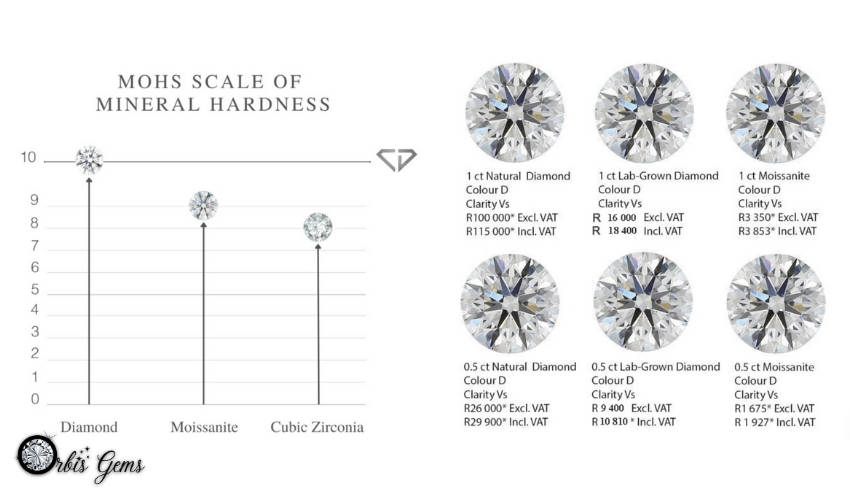
The ongoing moissanite vs diamond debate often centers on cost. The price gap between moissanite engagement rings and diamond engagement rings widens with size. For instance, a 2-carat traditional diamond in South Africa can soar to R500,000, while a similar-sized moissanite engagement ring is priced around R16,000.[3]Even when considering higher quality specifications, such as a 1ct D color, VS clarity diamond versus a similar moissanite engagement ring, the cost difference is stark.
A 1ct natural diamond of this quality could cost around R100,000 (excluding VAT), whereas a 1ct moissanite engagement ring of similar quality is only about R3,350 (excluding VAT). This discrepancy highlights the affordability of moissanite engagement rings compared to their natural diamond counterparts.[4]
Price Consistency: Why Moissanite Offers Better Value
Moissanite prices are remarkably consistent, a benefit of their man-made origin in crystalline silicon carbide.[5] Unlike natural diamonds, where factors like inclusions and color variations significantly impact price, moissanite maintains uniformity in quality and cost.[6]This consistency in moissanite stones, especially compared to natural diamonds, is a significant advantage for buyers seeking an engagement ring stone.
Furthermore, this consistency is further clarified by providing the Diamond Equivalent Weight (DEW) in carats for each engagement ring, simplifying the comparison process for buyers when weighing moissanite vs diamond options.[7]This makes choosing moissanite over natural diamonds a more straightforward decision for those in the market for unique engagement rings.
Moissanite: The Cost-Effective Gemstone and Ring Alternative
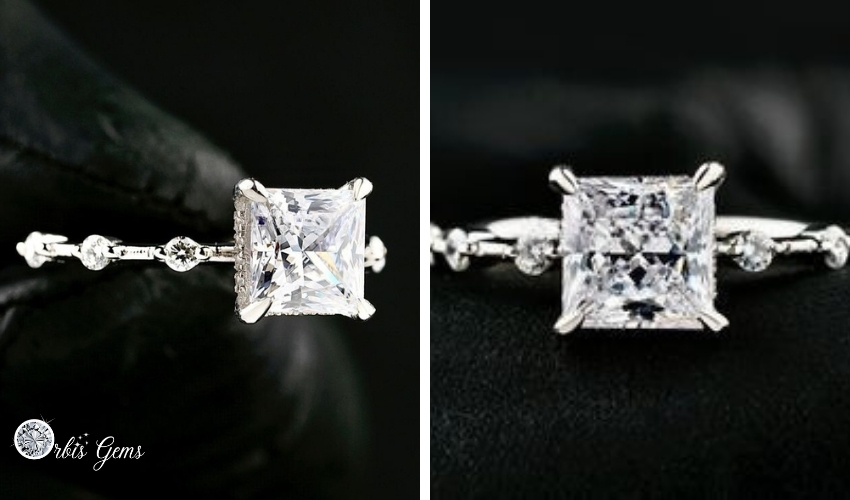
Moissanite challenges traditional diamonds not only in brilliance and quality but also in cost-effectiveness. [8] This affordability grants consumers the freedom to explore diverse designs and customizations, particularly evident in our newly introduced range of moissanite engagement rings and moissanite rings. These rings feature moissanite gemstones and moissanite stones, offering a stunning alternative to the classic diamond engagement ring.
Whether you’re looking for a statement piece or a subtle accent, choosing a moissanite ring ensures a blend of beauty, quality, and economic sensibility. The allure of moissanite is further enhanced when set in silicon carbide, a material that adds to the gemstone’s durability and overall appeal.
Long-term Value: Moissanite’s Enduring Appeal and Durability
When considering the long-term value of gemstones, natural moissanite stands out for its remarkable durability and enduring appeal. This section delves into why investing in moissanite is not just an immediate joy but a lifetime choice.
Moissanite Durability & Mineral Hardness
Moissanite’s durability is one of its most impressive attributes. Ranking second only to colorless diamonds on the Mohs scale of mineral hardness, moissanite scores a commendable 9.25 out of 10.[9] This high ranking assures that moissanite gems and moissanite rings are more resilient to daily wear and tear compared to other popular gemstones[10] like sapphires, rubies, and emeralds, which range from 7.5 to 9 on the Mohs scale.[11]
This makes moissanite not only an affordable option but a durable one, aptly suited for those seeking a lasting diamond alternative. Moissanite engagement rings, adorned with these resilient gems, offer a perfect combination of lasting beauty and value.[12]
Scratch and Chip Resistance
When investing in something as significant as an engagement ring, longevity and resilience are key. Moissanite excels in this area, being naturally resistant to scratches and less susceptible to chipping or breaking.[13]
Its chemical composition, Silicon Carbide, is also used in applications requiring high durability, such as bulletproof vests[14] and metal cutting saws.[15] This inherent toughness means that moissanite can easily withstand the rigors of daily wear, making it the ideal “forever stone.”[16]
Moissanite’s High Tolerance to Heat
Another remarkable property of moissanite is its exceptional heat resistance.[17] With a melting point of 2730 °C,[18] moissanite surpasses many other gemstones in heat tolerance. This property is particularly beneficial during jewelry resizing or repairs, where a jeweler’s torch is used. [19]
Moreover, moissanite’s resilience to high temperatures ensures that it can even survive house fires,[20] which typically burn at around 1,100 °F, without permanent damage or color alteration.[21]
The Rarity of Moissanite Damage
While no gemstone is entirely indestructible, moissanite’s likelihood of experiencing cracks or chips is significantly lower than other gemstones. This is partly due to its lab-grown nature, resulting in fewer inclusions and, consequently, a reduced risk of fracture. [22]
In the rare event of damage, moissanite’s robust structure ensures that it can often be polished back to its original state, retaining its beauty and value over time.
Ethical and Environmental Considerations Of Moissanite vs Diamond
Sustainable Sourcing: The Eco-Friendly Aspect of Moissanite
Sustainable sourcing is a key factor that sets moissanite apart from diamonds. In this section, we’ll explore how the eco-friendly production of moissanite positions it as a responsible choice for conscious consumers.
The Environmental Toll of Diamond Mining
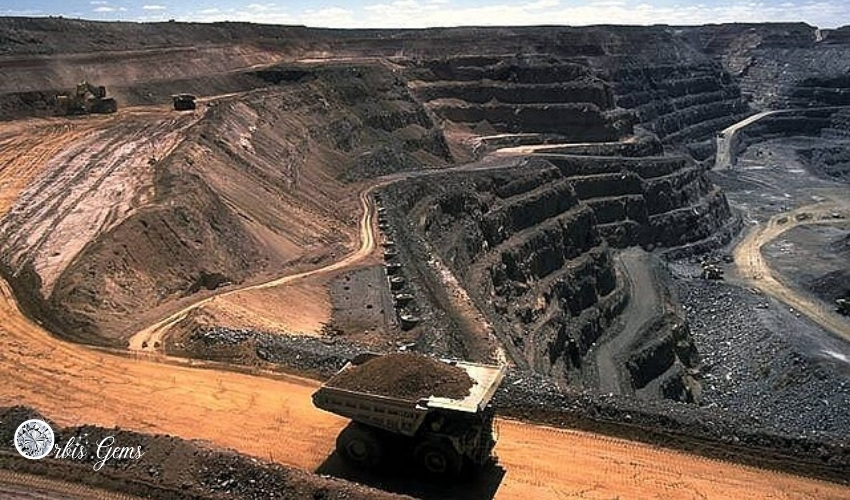
The extraction of diamonds has severe ecological repercussions. Ohio State University reports that diamond mining leads to extensive soil erosion, deforestation, and pollution. These environmental impacts are alarming, ranging from the destruction of vital ecosystems and local wildlife to the creation of massive pollution levels due to energy-intensive mining processes. [23]
As the awareness of these consequences grows, the demand for ethical alternatives like moissanite is increasing.
Moissanite: A Conscious Choice
Moissanite emerges as a responsible choice in the face of these environmental challenges. Created in laboratories, moissanite sidesteps the destructive processes associated with diamond mining. This not only includes avoiding deforestation and soil erosion but also significantly reducing water and air pollution.[24]
By choosing moissanite, consumers are not just selecting a gemstone for its beauty but also making a statement against the environmental and human costs of diamond mining.
Ethical and Eco-Friendly Production
Moissanite’s lab-created nature ensures a conflict-free and ethical production process. Unlike diamonds, which have often been linked to conflict and exploitation, moissanite is produced under controlled conditions that prioritize environmental conservation and worker welfare.
This ethical production extends beyond the absence of conflict—it represents a commitment to sustainable and responsible jewelry manufacturing.[25]
Technology and Sustainable Growth
The technological advancements in moissanite production have further solidified its position as an eco-friendly option. The production of moissanite requires less energy and water compared to diamond mining, producing less waste in the process. [26]
As technology evolves, the efficiency and sustainability of moissanite production are only expected to improve, offering an even greener choice for consumers.
Impact on the Fashion Industry
The fashion industry’s growing embrace of moissanite is a testament to its potential in revolutionizing jewelry trends. Celebrities and fashion designers are increasingly adopting moissanite for its aesthetic appeal and ethical value. This trend is not only driving demand but also fostering innovation in moissanite jewelry designs. [27]
The Future of Moissanite in Jewelry
Moissanite’s growing popularity signifies a shift in consumer preferences towards more sustainable and ethical jewelry choices.[28] With its combination of beauty, affordability, and environmental consciousness, moissanite is not just a viable alternative to diamonds but a forward-thinking choice in a world increasingly concerned with sustainability. [29]

Ethical Implications: Moissanite as a Conscious Choice
In the realm of fine jewelry, the ethical implications of one’s choice are as significant as aesthetic preferences. Moissanite, with its conflict-free and ethical sourcing, offers a compelling alternative to diamonds. This section delves into how choosing moissanite aligns with a commitment to ethical consumerism.
Moissanite: A Conflict-Free Alternative
One of the most critical ethical considerations when it comes to gemstones is ensuring they are conflict-free. Diamonds, unfortunately, have a long history of being associated with conflict and exploitation, often termed as “blood diamonds.” These diamonds are mined in war zones and sold to finance armed conflict against governments.[30]
On the contrary, moissanite is created in controlled laboratory environments,[31] ensuring that its production does not fund warfare or contribute to human suffering. This aspect of moissanite appeals to socially conscious consumers who are increasingly seeking assurances that their luxury purchases do not come at a human cost.[32]
Promoting Responsible Consumer Practices
Choosing moissanite is not just about avoiding the ethical pitfalls of diamond mining; it’s also about promoting responsible consumer practices. By opting for a lab-created gemstone, consumers are taking a stand against the environmental and social issues associated with traditional mining practices.
This choice reflects a broader commitment to sustainability and ethical consumerism, where the implications of one’s purchases are considered in a global context. Moissanite, therefore, is not just a gemstone choice; it’s a symbol of a consumer’s values and their dedication to making responsible, ethical decisions.
Aesthetic and Practical Advantages Of Moissanite vs Diamond
Brilliance and Clarity: The Unmatched Sparkle of Moissanite
The allure of moissanite lies not only in its similarity to diamonds but in its exceptional brilliance and clarity that often surpasses them. This section explores how the clarity and refractive properties of moissanite contribute to its unparalleled sparkle and fire.
Clarity of Moissanite
Clarity in gemstones, including moissanite, refers to the absence of internal and external imperfections, known as inclusions and blemishes.[33] Our moissanite, for instance, boasts a clarity rating of VS on the GIA scale, indicating that any impurities are barely noticeable, even under a jeweler’s eyeglasses with 10x magnification.
This high level of clarity is a direct result of the controlled laboratory conditions in which moissanite is created, allowing for minimal natural inclusions compared to diamonds.[34]
Moissanite’s Clarity and Brilliance
The clarity of moissanite significantly contributes to its brilliance.[35] With fewer inclusions and blemishes, moissanite is often “eye-clean,” appearing flawless to the naked eye. [36]This clarity allows for unimpeded passage of light through the stone, enhancing its natural brilliance.
Moissanite’s high refractive index, at 2.65 compared to diamonds’ 2.42, further amplifies its brilliance and fire.[37]This means that moissanite can bend light more effectively, resulting in greater dispersion of light into the colors of the rainbow, known as “fire.”[38]
The Phenomenal Fire of Moissanite
The fire of moissanite is a defining feature, characterized by the dispersion of colored flashes of light. This spectacular display of rainbow-like colors adds to the gemstone’s overall allure.
When exposed to light, moissanite’s unique crystal structure scatters light into its spectral colors, creating an enchanting play of color that is particularly pronounced due to its higher total light dispersion.[39]
The Scientific Edge of Moissanite
The science behind moissanite’s fire and brilliance lies in its physical properties. The higher refractive index and total light dispersion not only result in more fire but also greater “brilliance,” or the amount of white light reflected back to the viewer’s eye.
This characteristic makes moissanite appear larger and more sparkling than a diamond of the same size and cut,[40] offering a visually stunning alternative that is both unique and captivating.
Durability and Maintenance: The Practical Appeal of Moissanite
Beyond its striking appearance, moissanite offers practical benefits in terms of durability and ease of maintenance. These qualities not only enhance its appeal but also contribute to its growing popularity as a choice for everyday jewelry. This section focuses on how moissanite combines beauty with practicality, making it an ideal choice for those who value both aesthetics and durability.
The Durability of Moissanite
Moissanite’s durability is one of its most compelling qualities. Rated at 9.25 on the Mohs Scale of mineral hardness[41], it is second only to diamonds in terms of hardness.[42] This impressive rating ensures that moissanite is highly resistant to scratching and chipping, making it an excellent choice for engagement rings and other daily-wear jewelry.
Moissanite’s toughness has been confirmed through extensive real-world wear tests, proving its ability to withstand the demands of various lifestyles, from the office worker to the dog groomer.[43]
Maintenance of the Ring
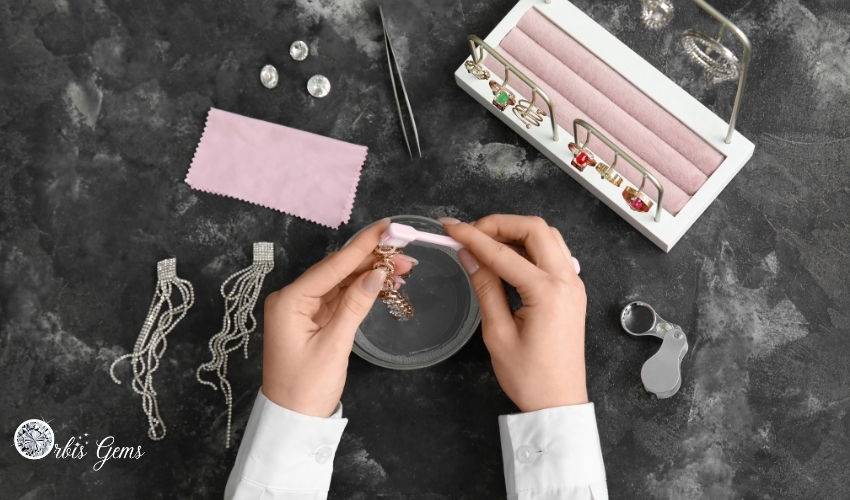
Maintaining moissanite jewelry is straightforward. Daily care is essential, and routine cleanings can easily be done at home. For instance, soaking the ring in warm soapy water and gently scrubbing with a soft toothbrush effectively removes oils and lotions. Professional cleaning once a year is recommended for optimal upkeep. [44]
It’s important to avoid direct contact with harsh chemicals, such as dissolvants or chlorine,[45] and to remove the jewelry during activities that might expose it to extreme conditions, like taking a sauna, DIY, housecleaning and swimming.[46]
Embrace Ethical Elegance: Discover the Moissanite Difference
As you embrace the allure of Moissanite, remember, you’re not just choosing a gemstone, you’re making a statement. At OrbisGems, we offer a range of stunning, ethically-sourced, and environmentally friendly Moissanite jewelry that aligns with your values.
Don’t just settle for traditional choices; opt for a brighter, more sustainable future with our exquisite collection. Explore our moissanite store today and take your first step towards a more responsible and dazzling world. Choose Moissanite Company, where beauty and ethics shine equally.
Conclusion
Moissanite emerges as a superior choice over diamonds for several compelling reasons. Environmentally, it’s far less damaging, avoiding the significant ecological impacts of diamond mining. Ethically, it stands clear of the often murky supply chain issues associated with diamonds. Economically, Moissanite offers a more affordable yet equally elegant alternative.
Aesthetically, its resemblance to diamonds, combined with fewer flaws, makes it a practical and beautiful choice. This synthesis of environmental consciousness, ethical integrity, cost-effectiveness, and aesthetic appeal positions Moissanite as a wiser choice for the conscientious consumer.
FAQ
Is Moissanite as durable as a diamond?
Yes, Moissanite is highly durable, ranking 9.25-9.5 on the Mohs scale of hardness, just below diamonds, which rank a 10. This makes it suitable for everyday wear.
How does the brilliance of Moissanite compare to that of a diamond?
Moissanite is known for its high refractive index, making it even more brilliant than diamonds. It displays a fiery, rainbow-like sparkle, whereas diamonds have a more subtle brilliance.
Can experts tell the difference between Moissanite and diamond?
Yes, experts can differentiate between Moissanite and diamonds using specialized equipment. Moissanite’s higher refractive index and different crystal structure are key distinguishing factors.
References
- Moissanite SA: Moissanite Price in South Africa
- Moissanite SA: Moissanite Price in South Africa
- Moissanite SA: Moissanite Price in South Africa
- Cape Diamonds: The Rare Natural Diamond
- Moissanite SA: Moissanite Price in South Africa
- Frugal Rings: Moissanite Inclusions
- Diamond Rensu: Moissanite Inclusions
- Diamond Rensu: Moissanite Inclusions
- Ring Artisan: Moissanite vs. Diamond – the question on everyone’s lips
- Felicegals: Can I Wear a Moissanite Ring Every day?
- Gem Society: The Mohs Hardness Scale and Chart for Select Gems
- Gem Society: What’s the Best Diamond Alternative?
- Stella Moissanite: The Ultimate Moissanite FAQ
- wikipedia: Silicon carbide
- britannica: silicon carbide
- Zen Moissanite: Durability of moissanite
- Lucce Rings: Moissanites History and Facts
- Wikipedia: Moissanite
- Reddit: Melted stones during resize?
- Lucce Rings: Moissanites History and Facts
- sf-fire: Home Fire Facts
- Mouza: LAB DIAMOND ENGAGEMENT RINGS
- blue and green tomorrow: Moissanite – The Ethical and Eco-Friendly Alternative to Diamonds
- diamond rensu: Moissanite and Ethical Jewelry
- diamond rensu: Moissanite and Ethical Jewelry
- My Moissanite: Moissanite: The Diamond Alternative
- Business World: The Rising Popularity Of Moissanite Jewelry And Its Potential
- diamond rensu: Moissanite and Ethical Jewelry
- Shiny Rock Polished: The Ethical and Sustainable Choice for Jewellery
- brilliant earth: History Of Blood Diamonds And The Kimberley Process
- Ben Garelick: Lab Grown Diamonds vs Moissanite
- the kings wood company: Moissanite’s Millennial Appeal
- ice cartel: What is Moissanite?
- diamond rensu: Is Moissanite Harder than a Diamond?
- Stars Gem: Moissanite Color and Clarity
- diamond rensu: Is Moissanite Good for an Engagement Ring?
- Do Amore: DIAMONDS VS MOISSANITE
- CHARLES & COLVARD: What Is Moissanite’s Fire & How It Compares to Other Gems
- ALabDiamond LLC: What is moissanite fire?
- fire and brilliance: WHAT IS MOISSANITE?
- stella moissanite: A Guide to Why You Should Invest in a Moissanite Gemstone
- gem society: Moissanite vs Diamond
- moissanite: The Durability of Moissanite
- psoui: Moissanite Ring Care Guide
- moissanite engagement rings: How To Look After Your Engagement Ring
- hermes: Jewelry Care Recommendations


